Compare Luxury Villas: Definitive Estate Evaluation Guide
Evaluating elite residential rentals, private island compounds, architectural estate management, and bespoke hospitality programming across international destination markets requires an intricate real estate framework. The global high-net-worth travel and asset acquisition sectors have evolved far beyond standard five-star hotel reservations. Today, discerning travelers, private family offices, and corporate leadership teams increasingly prioritize private residential estates. These standalone compounds offer absolute spatial control, customized culinary staffing, secure perimeters, and deep integration with surrounding natural landscapes.
Analyzing elite private residential rentals demands looking past promotional photography to inspect the operational infrastructure underneath. A luxury estate positioned along a secluded Mediterranean cliffside, a Caribbean beachfront, an Alpine ski ridge, or a Southeast Asian tropical jungle must manage complex logistical supply chains. Consequently, estate directors and management agencies must deploy reliable off-grid utility redundancies, professional security details, discrete back-of-house service routing, and rigorous property maintenance programs. When a property fails to execute these underlying operational protocols, service breakdowns and structural vulnerabilities quickly disrupt the guest experience.
Assessing high-end residential options across global tourism markets demands evaluating land-to-key ratios, staff-to-guest ratios, cancellation and security contracts, and total stay value calculations. When private wealth managers, corporate travel directors, and experienced travelers compare luxury villas, the process represents an exercise in risk management and experiential quality control. Understanding how properties manage staff choreography, preserve acoustic and visual privacy, and structure bespoke guest itineraries is essential for securing restorative, high-value travel outcomes.
Understanding compare luxury villas

When asset managers and luxury travel directors compare luxury villas, the primary task involves separating public marketing claims from physical property realities. A widespread misunderstanding assumes that any residential property advertised with high-end interior finishes automatically qualifies as an elite estate. In reality, many properties lacking professional management suffer from inconsistent housekeeping, unreliable telecommunications infrastructure, and poor maintenance standards.
Furthermore, analyzing premier private estates requires distinguishing between superficial aesthetic styling and functional operational architecture. A cliffside villa featuring floor-to-ceiling glass walls provides minimal restorative value if the building lacks acoustic insulation, adequate climate control zoning, or private staff quarters. Conversely, a true luxury estate utilizes dedicated back-of-house service corridors, soundproofed structural slabs, and integrated staff management teams that operate completely independent of guest living areas.
In addition, assessing these properties requires understanding how property management agreements and concierge services handle security and guest privacy. Managing an elite private estate requires isolating guest residential wings from external service traffic and public sightlines. When a property executes strict spatial separation—ensuring that service entries, security monitoring posts, and private living pavilions remain logically zoned—it creates a secure environment where high-profile individuals can relax and conduct confidential business.
Deep Contextual Background
The evolution of elite private villa rentals reflects a multi-decade shift from aristocratic family estates and traditional seaside boarding houses to professionally managed, ultra-exclusive residential compounds. In the mid-twentieth century, private estate leasing was largely restricted to family-owned villas in the Mediterranean or private Caribbean retreats rented informally through personal networks. These historic properties operated with minimal standardized hospitality services, relying instead on resident domestic staff and static architectural designs.
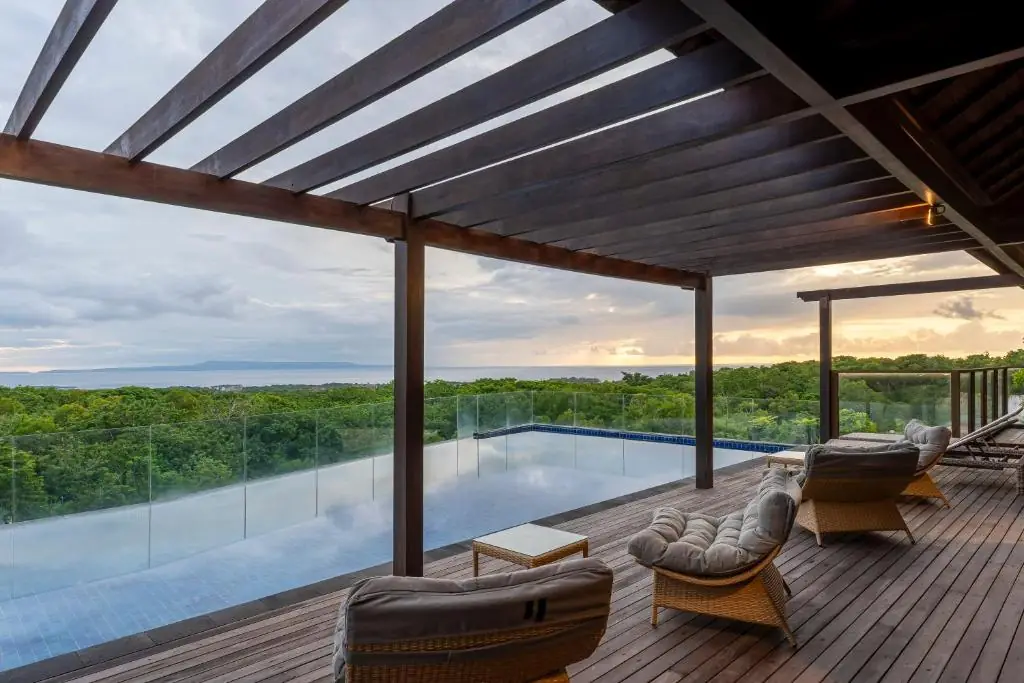
The late twentieth and early twenty-first centuries brought rapid globalization, wealth expansion, and the rise of specialized luxury hospitality management brands. High-net-worth travelers began demanding the privacy and space of a private home combined with the rigorous service standards, security protocols, and concierge support of a five-star hotel. Property owners and developers responded by constructing purpose-built compounds featuring private infinity pools, professional commercial kitchens, heliports, and integrated smart-home automation systems.
In the contemporary landscape, the market for elite private residential rentals has matured into an institutionalized asset class. Modern villa portfolios combine sustainable architectural design, medical-grade air and water purification, secure perimeter surveillance, and private butler teams managed by leading hospitality corporations. By integrating residential privacy with professional hotel-grade operations, premier private estates allow guests to experience complete seclusion backed by reliable legal, medical, and logistical support.
Conceptual Frameworks and Mental Models
Navigating the evaluation and selection of elite residential properties requires structured analytical models that account for spatial isolation, staffing ratios, and service integration.
The Estate Privacy and Isolation Index
This framework evaluates a property’s physical privacy and environmental quietness by assessing boundary acreage, distance from public access roads, and visual screening levels to guarantee visual isolation and zero light pollution across private terraces.
The Service Choreography Matrix
This model evaluates how effectively an estate manages the operational interface between private guests and support staff across three functional layers:
-
Front-of-House Service Layer: Butler teams, private chefs, and concierge staff executing unscripted, highly personalized hospitality without intruding upon guest sightlines.
-
Back-of-House Operational Layer: Subterranean service tunnels, independent staff entry gates, commercial laundry facilities, and secure staging kitchens.
-
Perimeter Security Layer: Biometric access control, closed-circuit optical monitoring, and discrete security outposts protecting the estate perimeter.
Key Categories and Variations
When individuals evaluate and compare luxury villas across global destinations, properties fall into distinct geographical, architectural, and operational categories. Industry analysts group these flagship assets into six primary variations.
Private Island Compounds
Entirely self-contained island estates featuring private airstrips, deep-water yacht docks, dedicated staff villages, and absolute territorial isolation.
-
Trade-Offs: Delivers unmatched privacy and security. However, it involves high logistical transport costs and complex supply chain dependencies.
Cliffside Marine Estates
Architectural compounds perched along dramatic coastal cliffs, offering sweeping ocean horizons, private funicular beach access, and marine-grade construction.
-
Trade-Offs: Unlocks stunning horizon vistas and private water access. On the downside, it requires specialized maintenance against salt-air corrosion and steep terrain management.
Alpine Ski and Mountain Chalets
Sprawling timber and stone estates situated directly on ski slopes or high-altitude mountain ridges, featuring wellness spas, ski rooms, and heated terraces.
-
Trade-Offs: Provides direct mountain access, cozy alpine luxury, and winter sports integration. Conversely, it faces severe winter weather logistics and seasonal price volatility.
Tropical Jungle and Rainforest Sanctuaries
Dispersed architectural pavilions integrated into lush tropical rainforests or hillside canopies, featuring open-air living spaces and natural plunge pools.
-
Trade-Offs: Offers deep biophilic immersion, organic architecture, and tranquil nature sounds. However, it requires active humidity control and pest management.
Historic Vineyard and Countryside Estates
Restored historic manors, Tuscan farmhouses, or French chateaux set within expansive agricultural acreage, vineyards, or rolling hills.
-
Trade-Offs: Grants pastoral scenery, wine culture, and historic architectural character. Nevertheless, it involves rural transport times and historic building maintenance.
Urban Penthouse and Rooftop Compounds
Multi-level private penthouse villas integrated into landmark high-rise towers, featuring private rooftop pools, helipads, and 360-degree city skyline views.
-
Trade-Offs: Secures central financial and cultural district positioning. However, it relies on shared building elevator infrastructure and urban acoustic management.
Luxury Villa Category Comparison Matrix
Detailed Real-World Scenarios
Analyzing real-world scenarios demonstrates how estate selection, spatial zoning, and operational staffing impact high-stakes private stays.
Managing a High-Confidentiality Corporate Retreat in the Caribbean
A technology conglomerate required a completely secure, private island compound in the Caribbean to host a five-day strategic executive summit.
-
Constraints: Strict requirement for zero media visibility; dedicated high-speed satellite communications; 24-hour private culinary service.
-
Decision Points: When executives compare luxury villas for corporate use, the planning committee evaluated a luxury hotel buyout against a fully staffed private island villa compound.
-
Failure Modes Identified: Hotel buyouts expose executives to public marina traffic, shared service staff, and accidental data leaks.
-
Second-Order Effects: Selecting the private island compound allowed security teams to lock down marine access points, while executive chefs managed all dietary requirements in a private commercial kitchen.
-
Resolution: The summit concluded with zero security breaches and high executive satisfaction, proving the value of private island compounds for confidential gatherings.
Overcoming Weather Logistics at an Alpine Chalet in the Swiss Alps
A family office principal booked a premier luxury ski chalet in Verbier for a two-week winter holiday with twelve family members.
-
Constraints: Strict arrival schedule; need for ski instructors and private chauffeured transport; dietary specificities.
-
Decision Points: The estate management team established pre-planned helicopter transfers from Geneva airport to bypass winter road traffic jams.
-
Failure Modes Identified: Heavy snowfall closed primary mountain access roads, trapping incoming guests in valley traffic.
-
Second-Order Effects: Because the heli-transfer was pre-arranged, the family bypassed closed highways entirely, arriving directly at the chalet helipad on schedule.
-
Resolution: The family enjoyed uninterrupted holiday timing, highlighting the necessity of integrated logistical support when evaluating elite properties.
Planning, Cost, and Resource Dynamics
Optimizing the selection and leasing of elite private estates requires balancing direct nightly rental rates against mandatory service fees, security deposits, and provisioning allowances.
Direct Versus Indirect Estate Expenses
-
Direct Costs: Base nightly or weekly rental rates, mandatory staff gratuities, security deposits, and local tourism taxes.
-
Indirect Costs: Private aviation or helicopter transfers, advanced food and beverage provisioning, specialized security personnel, and off-property excursion charters.
Financial Planning Matrix for Elite Villa Rentals
Tools, Strategies, and Support Systems
Executing seamless stays at premier private estates relies on specialized digital mapping tools, private aviation networks, and accredited agency partnerships.
-
Private Aviation and Heli-Charter Networks: Coordinating direct private air transfers into local airfields or estate helipads to bypass commercial airport congestion.
-
Specialized Villa Brokerage and Inspection Networks: Working with accredited luxury estate agencies that conduct physical property audits and staff background checks.
-
Secure Satellite Communication Portals: Verifying high-speed encrypted internet connectivity and dedicated backup routers for executive remote work.
-
Estate Floorplate and Zoning Audits: Inspecting architectural floor plans to verify that staff quarters are physically segregated from family guest suites.
-
Pre-Arrival Provisioning and Dietary Portals: Utilizing digital preference sheets to coordinate custom wine cellars, dietary requirements, and bespoke pantry stocking prior to arrival.
-
Comprehensive Travel Insurance with Default Riders: Securing robust travel insurance policies to protect against natural disasters, political instability, or medical evacuations.
Risk Landscape and Failure Modes
Failing to properly vet property management, infrastructure resilience, and contractual terms introduces severe operational risks during elite villa stays.
Unverified Property Management and Staff Inconsistency
Booking through unverified online portals that list properties without professional management, resulting in absent staff, broken amenities, and poor cleanliness.
Inadequate Off-Grid Utility Redundancies
Reserving remote island or mountain estates that lack backup generators or water filtration systems, leading to complete power failures during regional storms.
Unforeseen Perimeter Security Vulnerabilities
Selecting estates with open property lines or malfunctioning surveillance cameras, compromising personal privacy and asset safety.
Governance, Maintenance, and Long-Term Adaptation
Sustaining luxury standards across elite private residential portfolios requires continuous property maintenance, staff training, and rigorous pre-arrival inspections.
-
Pre-Arrival Estate Inspection Protocol: Conduct a 48-hour pre-arrival checklist verifying all HVAC systems, pool heating, security cameras, and kitchen appliances.
-
Quarterly Staff Service Audits: Review guest feedback and staff performance metrics to ensure adherence to five-star hospitality standards.
-
Layered Estate Maintenance Checklist:
-
Verify that backup diesel generators and automatic transfer switches function correctly.
-
Confirm that water purification and reverse osmosis systems meet health standards.
-
Inspect perimeter security gates, biometric locks, and optical sensors.
-
Audit marine docks, funicular lifts, and private sports equipment for mechanical safety.
-
Measurement, Tracking, and Evaluation
Assessing the quality and value of an elite villa stay involves monitoring both quantitative service metrics and qualitative guest experience signals.
Key Performance Indicators
-
Staff Responsiveness Index: The average time elapsed between a guest request and staff execution, targeted at under ten minutes for butler service.
-
Net Incurred Service Value Ratio: The tangible value captured through included chef services, chauffeured transport, and daily housekeeping relative to total rental spend.
-
Infrastructure Uptime Percentage: The percentage of stay duration executed with uninterrupted power, high-speed Wi-Fi, and climate control, targeted at one hundred percent.
Common Misconceptions and Oversimplifications
Villa Rental Versus Hotel Suites
When traveling with large family groups or multi-generational parties, renting a fully staffed private estate often costs significantly less per person than booking multiple five-star hotel suites while offering vastly superior privacy.
Staff Inclusions in Villa Rentals
Many residential properties are rented as empty real estate or include only basic housekeeping, requiring guests to hire private chef and butler teams independently unless booking through managed ultra-luxury portfolios.
Infrastructure Resilience on Private Islands
Private islands rely entirely on self-contained desalination plants, solar or generator microgrids, and maritime supply boats, making them more vulnerable to severe weather logistics than mainland properties.
Promotional Photography Accuracy
Promotional photography is often captured immediately post-construction; rigorous third-party agency inspections are necessary to verify current furnishing and mechanical conditions.
Ethical, Practical, or Contextual Considerations
Operating and leasing luxury private estates in delicate coastal, alpine, or island ecosystems carries significant environmental and social responsibility. Elite estate owners and management agencies must balance high-net-worth luxury with local ecological conservation, water stewardship, and community respect. Sustainable estate management practices—such as utilizing solar microgrids, implementing graywater recycling, sourcing organic produce from local agricultural markets, and employing local staff fairly—ensure that private residential compounds harmonize with their host communities. Respecting local culture and environmental limits transforms elite villa leasing into a sustainable, highly responsible sector of global travel.
Conclusion
When discerning travelers and asset directors compare luxury villas, the process requires an analytical approach that connects architectural design, spatial privacy, service choreography, and operational risk management. Relying solely on promotional imagery or unvetted online booking platforms exposes travelers to service inconsistencies, infrastructural failures, and compromised privacy. Conversely, by evaluating privacy indices, auditing staff-to-guest ratios, leveraging accredited villa brokerage networks, and verifying off-grid utility redundancies, private wealth leads and travel directors ensure complete operational control and extraordinary stay quality. Ultimately, thorough property auditing and rigorous operational planning transform private estate leasing into an effortless, highly restorative, and secure experience.